
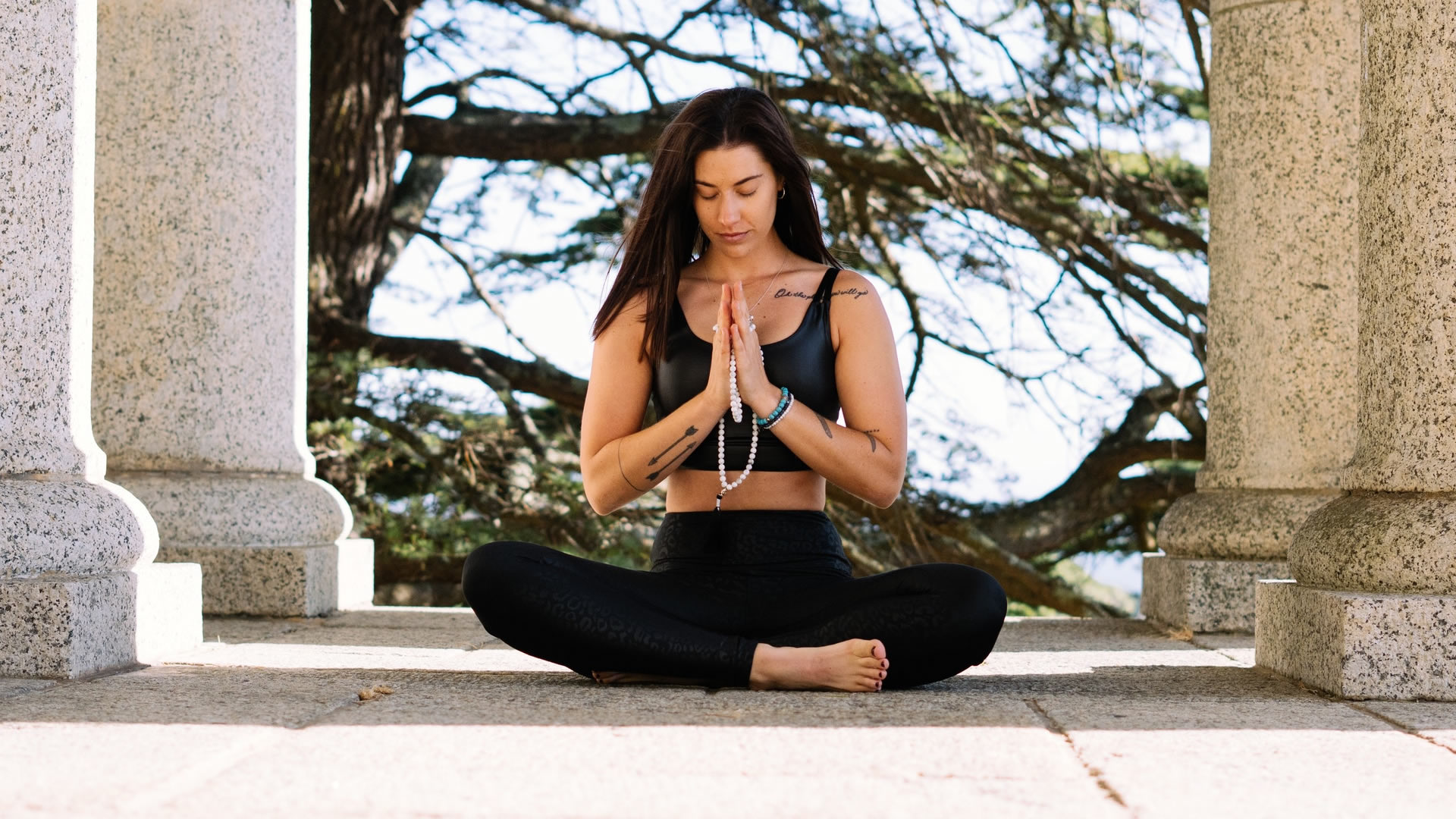
Meditation is simply the practice of focusing your attention on a particular object. Generally, this is something simple like a word or phrase, a crystal, a candle or the coming and goings of one's own breath. In our everyday life, our mind is constantly processing a barrage of sensations, visual impressions, emotions and thoughts.
When you meditate, you narrow your focus, limiting the stimuli bombarding your nervous system while in the process calming your mind. The reason meditation is so effective is that it connects you with a spiritual dimension, but many people simply call it breathing.
Science has proven that meditation actually restructures your brain and can train it to concentrate, feel greater compassion and cope with stress. Quite simply meditation can profoundly alter your experience with life.
Using an MRI, researchers in the Department of Neurology at the University of California School of Medicine found that a person that meditates brain had more grey matter in areas of the brain that are important for attention, emotional regulation and mental flexibility. Increased grey matter typically makes an area of the brain more efficient at processing information.
Also, new research now shows that meditation can improve your ability to concentrate in two ways. First, it enables you to better focus and secondly, it can make you more aware of what is going on around you.
Researchers have shown that concentrating in meditation, and focusing on one thing, activates the area of the brain that is responsible for controlling attention. They also infer that experienced meditators that train their brains require much less effort to focus and increase control over limited brain resources than non-meditators.
Additional research has shown that meditation can also help people with anxiety disorders. After mindful mediation, brain scans showed an improvement in these people's abilities to process information when they reflect on negative statements than they did before they started the study. The benefits were obvious to the participant consciously as they also reported less anxiety and worry. These and additional studies are proving that meditators undergo lasting positive changes in the brain.
What Are The Benefits of Meditation?
Stress Reduction
When we are stressed out, our bodies produce cortisol and adrenalin in abundance. This combination can lead to anxiety, depression, increased blood pressure, increase heart rate, brain fog, insomnia, inflammation, and the list goes on and on.
Depression
Clinical studies have shown cognitive meditation techniques to be as effective in relieving depression and anxiety as anti-depressants. We begin to see the positive in our lives and the ?light at the end of the tunnel.?
Weight Management
Breathing exercises have proven to increase mindfulness and body awareness. In addition, the practice of mindful eating allows us to connect with our food, often resulting in eating less and making more nourishing choices. Meditation also reduces our cortisol levels, resulting in bringing better balance to our brain and body health.
Clarity and Creativity
Meditation allows us to see new opportunities in our lives. By creating space in the mind and shutting out the noise, we are able to see things more clearly and therefore are better able to problem-solve in challenging situations.
Relationships
Meditation stimulates the part of the brain that helps us feel and be more empathetic to other people's emotional states. Meditation helps us cultivate an attitude of openness so that we can be less judgmental of our own thoughts and the thoughts and actions of others by nurturing the sense of connectedness between each other, we cultivate compassion and awareness that provides the ability to stand in the other person's shoes.
??????Getting Started
The key issue to mediation is to practice as regularly as possible and make it part of your self-care routine. If you feel you don't have time or feel tired, you need it more than ever. I highly recommend meditating for the many benefits. And while I?m not saying it?s easy, you can start small and get better and better as you practice. Don?t expect to be good at first, that's why it's called ?practice?.
These suggestions aren?t meant to help you become an expert, rather they're meant to assist you in getting started and staying motivated.
1. When it's time to get started, set the mood. Find a place where you won?t be disturbed, and adjust the lighting for a relaxed soft feel. Take a couple of minutes to wind down and clear your mind. Make sure there are no distractions like the phone, computer or TV. 2. You can sit on your bed or couch or if you feel comfortable on the floor, sit cross-legged with a cushion if need be. Sit with your back straight, shoulders relaxed, hands resting and eyes closed.
2. Make it a habit to do it first thing in the morning. It's easy to say, "Every day, I'll meditate," and then forget to do so. Instead, set an alarm for every morning when you get up, and perhaps write "mediate" on a sticky note somewhere you'll see it.
3. If you are new to this, try sitting for just a few minutes every day for one week. If that goes well, add a few more minutes and so on until you are meditating for 10 minutes a day. That would be awesome!
4. Begin to observe and check in with yourself as you settle into your mediation. How does your body feel? What is your mental state? Are you stiff, anxious or tired? Accept anything you bring to this meditation session as perfectly okay. You are getting to know yourself, do it with kindness instead of criticism.
5. Taking a few deep breaths before you begin your meditation can trigger a relaxation response. Then as you start the meditation, your breathing should return to a normal rate. Paying attention to your breathing will be important throughout the mediation resulting in lowering your stress levels.
6. Breathing in mediation does not need to be complicated. With full inhalations and exhalations begin to focus first only on the breath. Feel and experience the whole breath. Visualize your breath flowing through your whole body. Allow your breath to lead you deeper inside. Slowly begin to breathe naturally - without trying to control the breath.
7. Many people think meditation is about clearing your mind or stopping all thoughts. It's not the case. This does happen from time to time, but it isn't the "objective" of meditation. It's very normal to have thoughts. We can't just turn off our minds since they're thought factories. Instead, practise focussing your attention when your mind wanders.
8. There are many guided meditations online that are great, especially when getting started. Guided meditations that start for only one minute, or if you are more experienced and ready there are ones for 10 to 15 minutes. You can download these tracks and listen to them when and where you are ready to meditate.
9. You may also want to add candles, essential oils, crystals, and perhaps a favourite deity to expand your practice. Before you start selecting crystals, sit quietly with them, it helps to have some kind of idea as to what outcome you are seeking. Knowing why you are turning to meditation can be a good place to start. Meditating with crystals can be as simple as holding them in your hand and clearing your mind. This allows you to develop a connection to the crystals as you meditate.
10. Placing a crystal on your chakras is another way to get additional benefits from your mediation practice. Depending on what your intention is, choose to focus on the chakra that aligns with your purpose by using a relevant crystal. Knowing the stones that relate to which chakra can help if you feel there is a block somewhere that needs shifting. Usually, the colours of a gemstone will give an indication, for example, pink and green for heart, blue for throat, reds and oranges for root. To learn more about chakras, see Beginners Guide to the 7 Chakras
11. Some days will be easier than others, just like exercising. This could be related to how much sleep you had the night before or how much stress you were under that week. It's important to remember that this is a meditation practice, therefore it's not always going to be perfect. When you are finished with your two minutes, smile. Be grateful that you took this time to be good to yourself.
Meditation has truly amazing benefits and is something everyone can do to improve their mental and emotional health.